

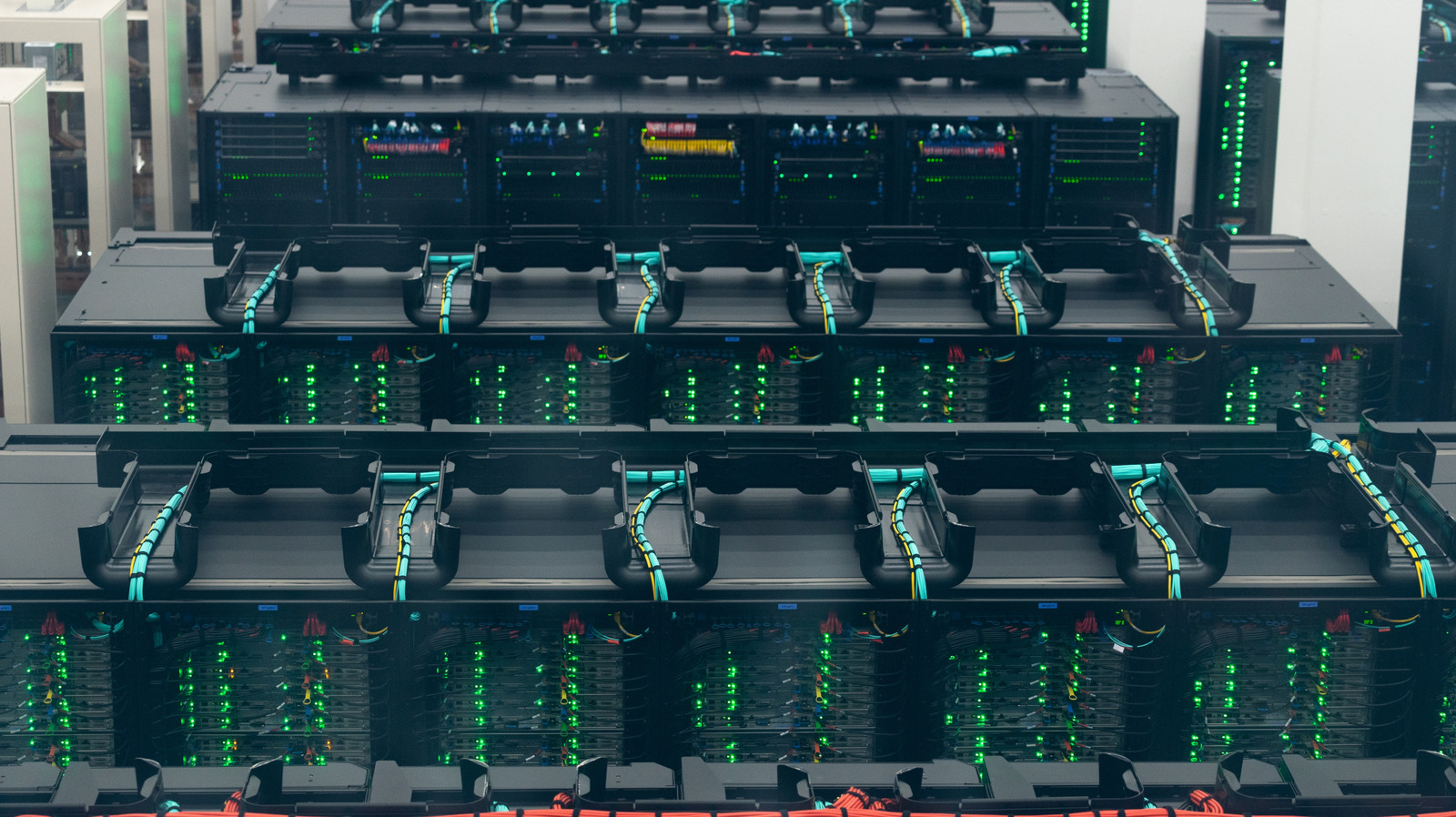
Supercomputers stand as the pinnacle of computational power, evolving significantly since the term was first coined in the 1960s with machines like the IBM 7030 and UNIVAC LARC. The first commercially successful supercomputer, the CDC 6600 designed by Seymour Cray, was launched in 1964, marking a revolution in computing. Today, the landscape of supercomputers has dramatically changed, with devices like the El Capitan supercomputer at the forefront.
Developed at Lawrence Livermore National Laboratory, El Capitan has been recognized as the fastest supercomputer in the world, achieving remarkable performance metrics that would have seemed impossible just a decade ago. This supercomputer not only leads in speed but is also among the largest in the United States, although defining its size involves more than just physical dimensions.
El Capitan has been validated as the fastest supercomputer according to the latest rankings by the Top500 project, delivering over 1.8 exaflops of performance on the High Performance Linpack (HPL) benchmark. This figure places it firmly in the exascale computing era, boasting a peak performance capability of 2.88 quintillion calculations per second. Such extraordinary power enables El Capitan to perform complex tasks, including identifying flaws in jet engines.
El Capitan's Advanced Architecture
Built on Hewlett Packard Enterprise's Cray EX255a architecture, El Capitan utilizes AMD EPYC processors alongside Instinct MI300A GPUs. This innovative configuration allows the supercomputer to efficiently manage both simulation-intensive and AI-driven workloads, reflecting the increasing convergence of high-performance computing and machine learning. El Capitan is equipped with over 11 million processing cores, allowing it to perform tasks in parallel across a sophisticated network of interconnected nodes.
El Capitan’s role extends beyond mere calculations; it is crucial for national security endeavors, ensuring the reliability and safety of the country's nuclear deterrent while facilitating simulations for Los Alamos and Sandia National Laboratories. Its combination of computational prowess and real-world application makes it a vital asset in the realm of modern supercomputing.
Assessing Size: Performance vs. Physical Dimensions
Labeling El Capitan as the largest supercomputer in the U.S. depends on how one interprets size. In terms of computational scale, it is undeniably the leader, with its 11 million cores surpassing the next largest supercomputer, Aurora, which operates with over 9 million cores. However, when evaluating physical size, the narrative shifts. El Capitan occupies approximately 5,900 square feet of machine room space; in contrast, Aurora's physical footprint is about 10,000 square feet, making it significantly larger.
This discrepancy highlights a critical trend in supercomputer design: achieving more computational power within a smaller physical footprint. This evolution is further exemplified by NASA's Pleiades supercomputer, which, despite occupying 14,000 square feet and featuring only about 230,000 CPU cores, pales in comparison to El Capitan's capabilities.
Thus, stating that El Capitan is the largest supercomputer in the U.S. transcends basic measurements. It is essential to consider the hardware capabilities and the unprecedented computational scale it embodies, which sets a new standard in supercomputing.
Conclusion
El Capitan represents a significant leap forward in supercomputing, not only for its speed and core count but also for its innovative architecture that integrates advanced AI capabilities. As it continues to tackle complex problems in various fields, it solidifies its position at the forefront of technological advancement in the computing world.
Source: SlashGear News